

A $375 payday loan costs $56 in fees for two weeks. That sounds manageable until you annualize it: 391% APR. And that number is just the starting point for the world of instant loans, where speed hides cost and convenience masks risk.
The average personal loan interest rate sits at 12.41% as of mid-2026, according to Bankrate. But "instant" doesn't mean "personal loan."
The products marketed as instant approvals range from reasonable to predatory, and the label itself tells you almost nothing about which category you're about to fall into.
This article is for the person staring at an unexpected $500 expense who typed "instant loan" into a search bar five minutes ago.
The Speed Tax on Fast Money
The single biggest mistake people make with instant loans is treating "fast approval" as a product category. It is a marketing label slapped onto wildly different financial products, each carrying different costs, terms, and long-term consequences.
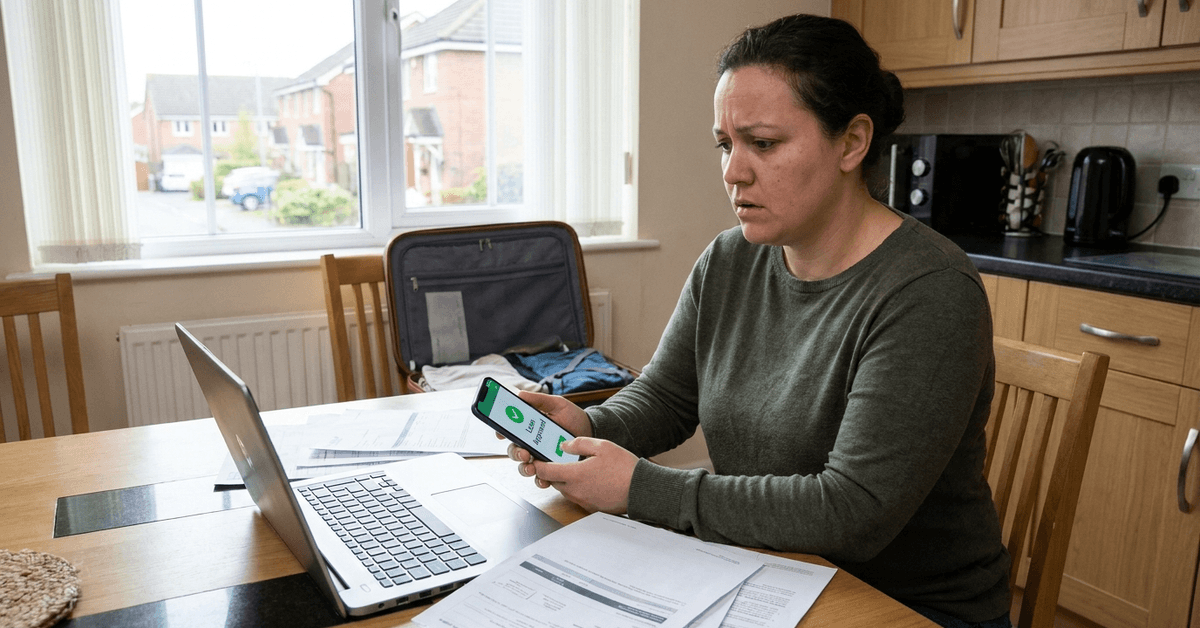
A same-day personal loan from SoFi or Upgrade might charge 8% to 36% APR with an origination fee between 1.85% and 9.99%.
A payday loan from a storefront lender will charge that same 391% annualized rate your state allows. Both can fund within 24 hours. Both call themselves "instant." The similarity ends there.
Origination Fees Nobody Reads
Origination fees on personal loans deserve more attention than they get. Upgrade charges an origination fee of 1.85% to 8.99%, and Best Egg charges 0.99% to 9.99%.
On a $10,000 loan, that 9% fee means you receive $9,100 but repay $10,000 plus interest. Upstart's representative example shows a $10,000 loan with a 7.25% origination fee of $725, meaning the borrower receives $9,275 and makes 60 monthly payments of $252 at a 21.23% APR.
I would skip any lender charging above 5% origination on a loan under $10,000, because at that point, the fee alone eats most of the urgency savings compared to waiting two more days for a credit union loan at 28% APR with zero origination.
The "Soft Check" Bait
Almost every instant loan advertiser leads with "no impact to your credit score." That part is true for the initial prequalification. A soft pull checks your profile without leaving a mark.
But accepting the loan triggers a hard inquiry. And if you're shopping three or four instant lenders in a panic, each acceptance attempt drops another hard pull onto your report.
The speed that felt like relief on Tuesday looks like desperation to a mortgage underwriter on Thursday.
Payday Loans vs. Personal Loans vs. BNPL: Where the Real Gaps Are
These three products dominate the "instant loan" search results, and lumping them together is dangerous. The cost structures, repayment timelines, and credit consequences are completely different animals.
| Feature | Payday Loan | Personal Loan (Online) | BNPL (Pay in 4) |
|---|---|---|---|
| Typical APR | 391% | 8% to 36% | 0% if on time, up to 36% if not |
| Loan Amount | $100 to $500 | $1,000 to $100,000 | Tied to purchase price |
| Repayment Term | 14 days | 2 to 7 years | 6 to 8 weeks |
| Credit Check | Usually none | Soft then hard | Soft or none |
| Credit Reporting | Rarely (unless collections) | Yes, all bureaus | Now reported as of 2025-2026 |
The takeaway: a personal loan and a payday loan sitting next to each other in search results does not make them comparable products.
Payday Loans Still Average 391% APR
The average payday loan interest rate in 2026 remains around 391% APR. That figure has barely moved in years. A typical two-week payday loan charges $15 per $100 borrowed. On a $375 loan, that is $56 in fees for 14 days of access.
About 76% of payday borrowers cannot afford repayment, and 1 in 5 declare bankruptcy within two years. The problem is structural.
The 14-day repayment window forces rollovers, and each rollover stacks another $56 fee. A single $375 loan can generate $500 or more in fees over a few months of renewals.
Credit union Payday Alternative Loans (PALs) cap APRs at 28%, and on a $400 loan for six months, the total interest cost is about $20. That is a fraction of what one payday cycle costs, but PALs require credit union membership, which takes time to set up. Not helpful when you need cash today.
BNPL's Growing Late Payment Problem
Buy Now, Pay Later looked harmless when it launched as a zero-interest "Pay in 4" option. The 2026 numbers paint a different picture.
47% of BNPL users paid late at least once in the past year, up from 41% in 2025 and 34% in 2024. That trend line has climbed every year for three consecutive years.
Late payment fees on some BNPL services run $7 to $8 per payment, and interest plus financing fees can reach up to 36%.
Interest-bearing installment loans now account for over 37% of annual BNPL loan issuance, nearly double the share from 2021. The "zero interest" pitch still dominates BNPL advertising, but more than a third of their actual volume now carries interest.
The credit reporting angle matters too. As of 2025 and into 2026, Equifax and TransUnion have started accepting BNPL data, and Experian rolled out a dedicated BNPL bureau. A missed BNPL payment on a $80 pair of sneakers can now drag your credit score, something that was invisible to bureaus just two years ago.
Who Should and Shouldn't Touch Instant Loans
The "instant loan" search is driven by panic, not planning. And the products designed for panicked borrowers are built to profit from that panic. But there are scenarios where fast funding makes sense, and scenarios where it makes things worse.
An instant personal loan (not payday, not BNPL) may be reasonable for someone who:
- Has a credit score above 670 and qualifies for rates under 15%
- Needs $2,000 or more for a specific, unavoidable expense
- Can commit to fixed monthly payments for 24 to 36 months without straining other bills
- Has compared at least two lenders using soft-pull prequalification
An instant loan is a bad fit for someone who:
- Needs less than $500 and would be better served by an overdraft line or PAL
- Is already carrying three or more active debts and adding another monthly payment
- Has no clear repayment plan beyond "I'll figure it out next month"
- Is using the loan for a want, not a need, and the urgency is emotional rather than financial
I think the widespread advice to "just get a personal loan for emergencies" skips something: the lowest available rate among Bankrate-featured lenders is 6.20%, but qualifying for that rate requires stellar credit and stable income.
The person Googling "instant loan" at 11 PM on a Wednesday rarely has either. A more honest recommendation for sub-650 credit scores is to call your bank and ask about a short-term overdraft line before applying anywhere.
The Application Process and Red Flags to Watch
Getting approved for an instant personal loan typically follows a predictable sequence, and knowing it helps you spot when a lender is cutting corners.
The standard process looks like this:
- Submit an online application with income, employment, and identity details
- Agree to a soft credit pull for prequalification
- Receive one or more loan offers with specific rates and terms
- Accept an offer, triggering a hard credit inquiry
- Complete identity verification (ID upload, sometimes a selfie or bank login)
- Funds deposited to your bank account, often same day or next business day
Red flags that signal a predatory lender: no APR disclosure before you accept, pressure to decide within minutes, no option to see the full loan agreement before signing, and fees described as "flat charges" rather than annualized rates.
Rates above 36%, short repayment terms, and no credit checks are warning signs of unsafe loans according to NerdWallet's 2026 personal loan guide.
Any lender that cannot tell you the total cost of the loan in dollars before you sign is not a lender. That is a trap with a website.
The 48-Hour Rule I'd Follow Instead
I disagree with the common financial advice that "speed matters most in an emergency." Speed matters, sure. But the difference between a 4-hour funding timeline and a 48-hour one can save hundreds or thousands of dollars in interest and fees.
A same-day payday loan at 391% APR on $375 costs $56 every two weeks. A credit union PAL at 28% APR on the same amount costs about $20 over six months. The PAL takes a day or two longer to fund. That 48-hour wait saves $36 on the first cycle alone, and potentially hundreds if the payday loan rolls over.
The only true same-day emergencies where waiting is impossible are narrow: bail, emergency medical costs not covered by a payment plan, or imminent eviction. Everything else allows 48 hours.
And those 48 hours let you compare at least two prequalification offers, read the full loan terms, and check whether your bank has an emergency overdraft option you never knew existed.
Questions People Ask About Instant Loans
These are the questions that keep showing up in search data, and the answers go beyond what a FAQ widget on a lender's site will tell you.
- Q: Can I get an instant loan with bad credit?
Some lenders like Upstart claim no minimum credit score requirement, but "approval" and "affordable" are different things. A sub-600 score usually means APRs above 25%, and at that rate on a $5,000 loan, total interest over three years exceeds $2,200. - Q: Do instant loans affect my credit score?
The initial prequalification uses a soft pull, which leaves no mark. Accepting a loan triggers a hard inquiry that stays on your report for two years. Missed payments get reported to bureaus and can drop your score significantly, especially now that BNPL data feeds into credit reports as of 2026. - Q: Are payday loans and instant personal loans the same thing?
They are completely different products sharing a marketing label. Payday loans average 391% APR, require full repayment in 14 days, and rarely check credit. Personal loans average 12.41% APR, offer multi-year repayment terms, and require credit verification. The only thing they share is the word "instant." - Q: What is the fastest way to get a loan without high fees?
Credit union PALs cap interest at 28% APR and can fund within one to two business days. Some online lenders like SoFi and Upgrade offer same-day funding at competitive rates for borrowers with credit scores above 670. Both options beat payday loans by massive margins on total cost. - Q: Is Buy Now, Pay Later safer than an instant loan?
BNPL looks safer because the initial plan often carries zero interest. But 47% of BNPL users paid late in the past year, and missed payment fees plus interest charges can push effective APRs past 100% on small purchases. BNPL now hits your credit report too, making it riskier than it was even 18 months ago.
Conclusion
The gap between a 391% payday loan and a 12.41% personal loan is enormous. Speed should never be the only filter when choosing where to borrow money fast.
A 48-hour pause turns panic borrowing into informed borrowing almost every single time. The lender who profits most from your urgency is the one you should trust least.