
A single-serve pouch of Royal Canin takes two to four weeks to arrive after filling out a pet profile survey. That pouch holds maybe one meal's worth of food. And your email address, mailing address, and pet details now live on a marketing list.
Most free premium pet food sample guides read like a treasure map to endless freebies. The missing piece is how little food arrives relative to the personal data and time spent hunting it down.
This one is for the pet owner whose dog or cat has a sensitive stomach, who keeps eyeing those $70 bags of grain-free kibble but can't stomach the price tag without proof it works. The cautious buyer who would rather test before committing.
The "Premium" Pet Food Label Is Slippery
The word premium on a bag of pet food has no legal standard behind it. No regulatory body in the U.S. or EU defines what separates a premium product from a standard one. A brand can slap that label on anything.
So What are These Brands Charging extra For?
Typically, the difference comes down to protein source and filler ratio. Brands like Orijen list fresh or raw animal ingredients as their first several items.
Cheaper brands lead with corn meal or poultry by-product meal. That ingredient order matters because pet food labels list by weight, and the first ingredient makes up the largest portion.
Grain-Free, Organic, and Hypoallergenic Options
Some premium lines target pets with food allergies or sensitivities. Grain-free formulas cut wheat and corn.
Hypoallergenic versions use novel proteins like venison or duck that a pet hasn't been exposed to before.
These specialty formulas are where prices climb fastest, sometimes past $90 for a 25-pound bag. That price jump is the exact reason sample hunting feels attractive.
Where Free Pet Food Samples Show Up and How Fast They Disappear
Sample availability is unpredictable. Brands run campaigns tied to product launches or seasonal promotions, and the window closes fast. The trick is knowing where to look without spending hours refreshing pages that went dead six months ago.
Brand Websites and Product Launch Pages
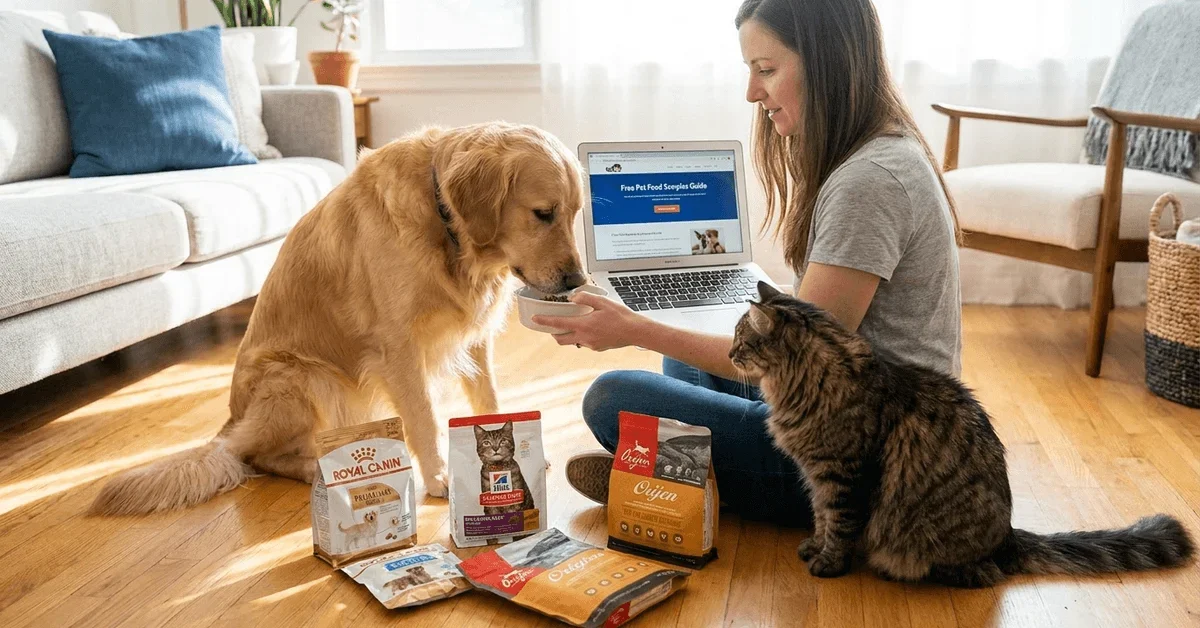
Royal Canin, Hill's Science Diet, and Orijen have all run direct sample programs through their own websites. These tend to appear on dedicated landing pages during new formula launches.
Royal Canin usually requires a full pet profile and survey completion. Hill's keeps it simpler, asking for shipping info only. The catch: these pages go live without announcement and disappear once supply runs out.
Retailer Programs Through Chewy, PetSmart, and Zooplus
Large online retailers occasionally include sample packs in shipments or run promotional boxes. Chewy has done this through its loyalty program, though the timing is random.
PetSmart runs periodic in-store sampling events that rarely get advertised online. Zooplus, popular across Europe, bundles trial portions into first-time orders. None of these programs run on a fixed schedule.
Pet Forums and Reddit Threads
Subreddits like r/dogs and r/cats, along with forums like DogForum and Catster, sometimes surface active sample links that brand websites haven't publicized yet.
Community members share direct URLs and report back on what arrived versus what turned out to be expired clickbait. The information has a short shelf life. A link that worked last Tuesday might be dead by Friday.
Social Media Flash Giveaways
Brands use Instagram and Facebook for limited-run sample drops. These are announced with little lead time. Following brand accounts and turning on post notifications is the only reliable way to catch them.
The portions are small, and the contests sometimes require tagging friends or sharing posts, which adds a social cost on top of the data cost.
Comparing Sample Offers: Wait Times, Requirements, and What Shows Up
I would rank these four brands as the most consistent sample providers based on how frequently their programs resurface, though none of them run samples year-round.
| Brand | Sample Type | Requirements | Average Wait |
|---|---|---|---|
| Royal Canin | Dry/wet mini-packs | Pet profile, survey | 2-4 weeks |
| Hill's Science Diet | Single pouch or can | Shipping info | 1-3 weeks |
| Orijen | Small kibble bag | Email, feedback form | 3-5 weeks |
| Ziwi Peak | Trial portion | Mailing address | 2-6 weeks |
Hill's Science Diet has the shortest average wait and the lightest data requirements of the four.
I think the Ziwi Peak wait time of up to six weeks makes their sample program borderline pointless if a pet has an urgent dietary need.
Six weeks is long enough for a dog with a food sensitivity to cycle through two vet visits. Speed matters when an animal is scratching itself raw or having digestive trouble.
How to Tell If a Sample Is Worth Feeding to Your Pet
Getting a free pouch in the mail feels like a small win. But a sample is only useful if you know what to look for on the packaging before opening it.
Check the Label Like You'd Check Your Own food
Best-by dates matter more on samples than on full bags because samples sit in warehouses and distribution channels longer. A sample that arrives with three months left on its shelf life is fine. One that expires next week got pulled from old inventory.
Traceability codes and allergen disclosures printed on the packaging tell a different story than the marketing copy on a brand's website.
A brand that prints batch numbers on a single-serve sample pouch takes quality control more seriously than one that ships unlabeled foil packets.
One Sample Meal is Not a Diet Trial
A single pouch cannot tell you whether a food works for your pet long-term. Digestive adjustment takes roughly seven to ten days of gradual mixing.
A true test means buying at least a small bag and transitioning slowly. The sample tells you one thing: will your pet eat it at all? That binary yes-or-no is the only reliable data point from a single serving.
I think that approach costs more than buying a small trial-size bag from Chewy or a local pet store for $10 to $15, because the hidden costs of sample chasing add up: newsletter spam, data harvesting, weeks of waiting, and portions too small to assess digestive compatibility.
Staying Safe While Testing New Pet Food
Switching foods too often causes gastrointestinal issues in dogs and cats. The enthusiasm of trying every free sample can work against a pet's health if introductions happen too fast.
A few ground rules worth following:
- Request samples only from brands or retailers with a verifiable track record and a physical business address
- Space out new food introductions by at least two weeks so digestive reactions are traceable to a single change
- Watch for itching, vomiting, lethargy, or loose stool in the 48 hours after introducing any new food
- Skip any sample request form that asks for payment info, social security details, or anything beyond basic shipping and pet data
The Privacy Angle Most Sample Guides Ignore
Every sample request form collects data. Some brands share mailing lists with third-party marketers. A surge of pet product junk mail or email spam after requesting samples is common.
Creating a dedicated email address just for sample sign-ups keeps the noise contained. And checking a brand's privacy policy on the FDA's pet food page before submitting personal details is a step most guides never mention.
Questions People Ask About Free Premium Pet Food Samples
These come up often when pet owners start looking into sample programs for the first time.
- Q: Are free pet food samples safe for puppies and kittens? Not always. Many samples are formulated for adult pets, and the caloric density or protein levels may not suit growing animals. Check the label for a life-stage designation before feeding any sample to a young pet.
- Q: How many brands offer free pet food samples at any given time? The number fluctuates. On any given month, maybe two to four major brands have active sample programs running. Smaller brands rotate in and out, and supply limits close programs fast.
- Q: Can I request pet food samples if I live outside the U.S.? Some brands like Ziwi Peak (based in New Zealand) and Zooplus (Europe) run regional sample programs. Most U.S.-based brand samples ship domestically only. Always check shipping restrictions on the request form.
Conclusion
A $12 trial-size bag gives more dietary data than a dozen free single-serve pouches spread across months. Free samples work best as a first taste test, not a substitute for a proper feeding trial.
The pet food brands that run the most generous programs also tend to produce the most marketing follow-up. Knowing that trade-off ahead of time puts the pet owner, not the brand, in control of the process.